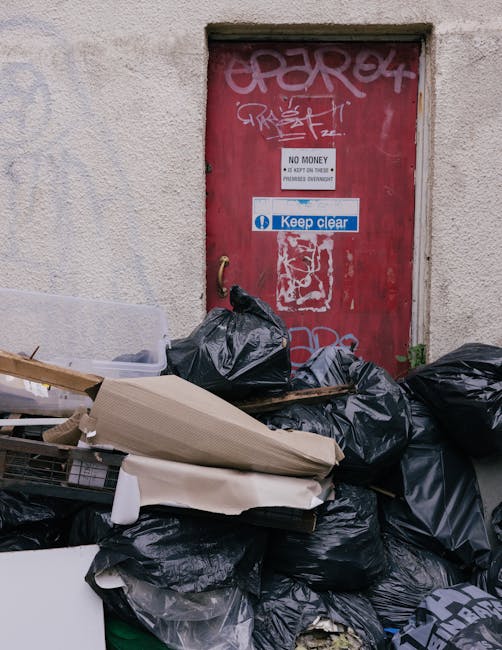
Shoreditch High Street Rubbish Drop-Off and Collection Map: A Practical Local Guide
If you are trying to work out where to take unwanted items, how rubbish collection works near Shoreditch High Street, and which disposal option makes the most sense, you are not alone. The phrase Shoreditch High Street rubbish drop-off and collection map usually means one thing in practice: a simple way to understand where waste can go, who collects it, what can be taken away, and how to avoid wasting time on the wrong option.
That matters more in Shoreditch than many people expect. The area is busy, tightly packed, and full of mixed-use properties, so a poor disposal plan can turn into a blocked pavement, a missed collection, or a costly second trip. This guide breaks the whole process down into clear steps. You will see how drop-off and collection typically work, what kinds of waste are easiest to move, where the common problems are, and when a professional clearance service is the smarter route.
For readers who need practical support beyond a one-off trip, services such as waste removal, office clearance, and home clearance can be a better fit than trying to handle everything yourself. In a location like Shoreditch High Street, convenience and timing often matter as much as the waste itself.
Table of Contents
- Why Shoreditch High Street rubbish drop-off and collection map Matters
- How Shoreditch High Street rubbish drop-off and collection map Works
- Key Benefits and Practical Advantages
- Who This Is For and When It Makes Sense
- Step-by-Step Guidance
- Expert Tips for Better Results
- Common Mistakes to Avoid
- Tools, Resources and Recommendations
- Law, Compliance, Standards, or Best Practice
- Options, Methods, or Comparison Table
- Case Study or Real-World Example
- Practical Checklist
- Conclusion
- Frequently Asked Questions
Why Shoreditch High Street rubbish drop-off and collection map Matters
At first glance, a rubbish drop-off and collection map sounds straightforward: find a place, put the waste there, move on. In reality, the local picture is rarely that simple. Shoreditch High Street sits in a dense urban area with heavy pedestrian flow, limited loading space, mixed residential and commercial use, and frequent access constraints. That combination changes how waste needs to be planned.
A good map or disposal plan helps you answer a few basic questions before you start lifting anything:
- Can the waste be taken away in one go, or will it need sorting?
- Is it household rubbish, office waste, bulky furniture, or construction debris?
- Will you need timed collection, a van stop, or a drop-off point?
- Are there access restrictions, parking issues, or building rules?
That is why local waste planning is not just about convenience. It reduces the chance of fly-tipping, protects shared spaces, and avoids the sort of last-minute scramble that tends to happen when a skip is booked too late or a loading bay is already occupied. If you are managing premises near the High Street, it is worth thinking beyond the bin as well. The right approach may involve business waste removal or a scheduled clearance rather than a simple drop-off.
There is also a trust element. A clear waste route shows staff, tenants, contractors, and neighbours that rubbish is handled responsibly. In a busy neighbourhood, that can make a surprisingly big difference to how a property is perceived.
How Shoreditch High Street rubbish drop-off and collection map Works
Think of the map as a decision tool rather than a literal street diagram. For many people, it is a way of matching the waste type to the most suitable disposal method. A reliable route usually falls into one of three categories: drop-off, scheduled collection, or full clearance.
1. Drop-off
Drop-off means you take items to an approved facility or a designated local point, if one is available and suitable. This can work well for smaller amounts of rubbish, separated materials, or items that are easy to transport. It is usually the most hands-on option, but it can also be the most time-consuming, especially if parking is awkward or the load is heavy.
2. Collection
Collection means waste is picked up from your property, site, or loading point. That is often better in Shoreditch because access can be the main challenge rather than the disposal itself. Collection works well for bags of general waste, furniture, office clutter, and other items that would be inconvenient to move yourself. If the waste is bulky or awkward, a dedicated collection is often the safer option.
3. Full clearance
Clearance is the broader service. Instead of moving one bag or one chair, the team clears multiple item types from a room, flat, office, garage, loft, or building. For example, a tenant moving out of a compact flat near Shoreditch High Street may find a flat clearance far more efficient than multiple drop-offs. The same is true for a business that needs an office clearance with desks, packaging, and old equipment all mixed together.
In practice, the best route is chosen by weighing three things: access, waste type, and urgency. That sounds simple, but those three factors are what usually decide whether the job feels easy or irritating. Truth be told, waste removal is rarely about the waste alone.
Key Benefits and Practical Advantages
A well-planned local rubbish map does more than move items from one place to another. It saves time, reduces mistakes, and lowers the odds of a costly backtrack. That is especially useful in Shoreditch, where one missed detail can mean an extra lift, an extra walk, or a wasted parking slot.
- Fewer wasted journeys: You know in advance whether you need a drop-off point or a pickup.
- Cleaner shared spaces: Waste is removed without lingering in hallways, front steps, or loading areas.
- Better planning for mixed waste: Different materials can be handled in the right way from the start.
- Reduced physical effort: Heavy or awkward items do not need multiple manual moves.
- More predictable costs: A clear plan helps prevent last-minute add-ons or repeated handling.
There is also a sustainability benefit. When rubbish is sorted properly, recyclable material is less likely to be mixed in with general waste. If that matters to you, it is worth reviewing a provider's recycling and sustainability approach before booking. In a city environment, the greener option is often the more organised one.
For many households and landlords, the biggest advantage is peace of mind. You do not have to guess whether the sofa, the broken wardrobe, or the pile of flat-pack packaging belongs in one run or three. A clear route solves that uncertainty quickly.
Who This Is For and When It Makes Sense
This kind of local waste planning is useful for a wide range of people, not just those dealing with a big clear-out. In fact, some of the smallest jobs are the ones that get postponed the longest because they feel too minor to organise.
- Residents clearing a flat, replacing furniture, or dealing with post-move clutter.
- Landlords and letting agents preparing a property between tenancies.
- Office managers disposing of old desks, chairs, boxes, and general commercial waste.
- Contractors who need builder's debris taken away after light works or refurbishments.
- Homeowners who need a loft, garage, or garden area cleared efficiently.
It also makes sense whenever access is difficult. Shoreditch High Street can be awkward for unloading, and that is enough on its own to shift the decision toward collection rather than self-haul. If you are dealing with bulky furniture, the service route may be more practical than hiring a vehicle and spending half the day figuring out where to stop. In that case, furniture disposal or furniture clearance can be much more efficient.
And if the job is a bit bigger than expected? That happens all the time. A simple tidy-up often turns into a full room clear-out once people see what is behind the cupboard or under the stairs. Not exactly a surprise, but it does happen.
Step-by-Step Guidance
If you want the process to go smoothly, the best approach is to treat it like a small project. The steps below work whether you are managing a home, a flat, or a business premises.
- Identify the waste type. Separate general rubbish from furniture, electrical items, builder's waste, garden cuttings, and reusable items.
- Check access. Look at stairs, lifts, parking, loading space, and any restrictions on the property or street.
- Estimate volume. Decide whether you are dealing with a few bags, a van load, or a full clearance.
- Choose the most practical route. Drop-off is fine for small loads; collection is usually better for bulky or time-sensitive waste.
- Confirm timing. Work around building access, business hours, or local congestion where possible.
- Prepare the items. Bag loose waste, dismantle furniture only if necessary, and keep sharp or hazardous objects separate.
- Book the service or plan the trip. Use a provider that suits the waste type and the level of handling required.
- Keep records if needed. Businesses and landlords should retain proof of collection or disposal where appropriate.
If your load includes office furniture or mixed commercial items, it may be worth pairing this with a wider service such as office clearance. For residential moves or tenant turnovers, house clearance can simplify what would otherwise be a long, fragmented process.
As a rule of thumb, the less you have to move items twice, the better the job will go. Waste handling is one of those tasks where "good enough" can quickly become "why did I do that twice?"
Expert Tips for Better Results
In our experience, the difference between a smooth clearance and a messy one usually comes down to preparation. A little thought before the van arrives, or before you set out to drop items off, makes a visible difference.
- Sort by material, not just by room. Furniture, cardboard, wood, metal, and general rubbish are easier to handle when grouped sensibly.
- Keep access clear. Even a tidy corridor can become a bottleneck if items are stacked where people need to pass.
- Use photographs when requesting quotes. Good visuals help reduce surprises and make pricing more accurate.
- Plan for awkward items first. Sofas, wardrobes, and large desks usually dictate the logistics.
- Ask about recycling routes. Not everything should go straight to disposal; some items may be suitable for reuse or material recovery.
For garden jobs or outdoor tidy-ups, the same principle applies. Branches, soil, hedge trimmings, and broken outdoor furniture are easier to process when separated. A targeted garden clearance can save you from mixing clean green waste with heavier mixed rubbish.
If the waste is from a renovation or repair project, consider whether it belongs with builders waste clearance rather than ordinary rubbish collection. That distinction matters because construction debris is often heavier, dustier, and less predictable than household waste.
Common Mistakes to Avoid
Most problems with rubbish drop-off and collection are avoidable. They usually come from rushing the plan, underestimating volume, or assuming access will be easier than it is.
- Not checking what can actually be dropped off. Different facilities and services accept different materials.
- Leaving sorting until the last minute. This leads to delays and poor loading decisions.
- Blocking walkways or entrances. In shared buildings, this creates safety and access issues.
- Mixing reusable items with genuine waste. Good items may be harder to recover once they are blended in.
- Forgetting about heavy items. Weight matters, especially when stairs or narrow access are involved.
- Ignoring provider terms. Booking conditions, payment details, and collection expectations should be read carefully.
Another common mistake is assuming the cheapest option is the best. Sometimes it is; sometimes it is not. If you need secure handling, proper insurance, and a team that understands difficult access, the lower headline price can disappear once the hidden friction appears. Before booking, it helps to review insurance and safety information and the provider's pricing and quotes guidance.
And if you are sorting a property after a move or sale, do not leave unwanted furniture to become a second problem later. It rarely gets smaller on its own, despite our best hopes.
Tools, Resources and Recommendations
A good disposal plan is easier when you use a few simple tools. You do not need anything fancy, just enough structure to avoid guesswork.
- Phone photos: Useful for quoting, planning, and identifying item types.
- Room-by-room notes: Helpful when the waste is spread across several spaces.
- Basic labels or tape: Good for marking what stays, what goes, and what needs special handling.
- Measurements: Especially important for large furniture, appliances, or storage items.
- Access notes: Stair counts, lift size, loading restrictions, and entrance details all help.
For many readers, the most helpful resource is a service that can handle mixed waste without making the process complicated. That is where broader support such as waste removal comes in handy. It keeps the job simple when you are dealing with more than one waste stream.
If you want reassurance about the company behind the service, browse the about us page and the site's support information, including the health and safety policy and contact us page. Those pages do not remove the waste for you, of course, but they do help you judge whether a provider is properly organised.
Law, Compliance, Standards, or Best Practice
Waste disposal in the UK is not something to treat casually. You do not need to know every technical detail to make a good decision, but you should understand the basics. The main idea is simple: waste should be handled responsibly, transferred to an appropriate recipient, and kept separate where required.
For households, the practical standard is usually straightforward. You want waste removed safely and without causing obstruction, nuisance, or contamination. For businesses, the expectations are stricter because commercial waste often comes with record-keeping, duty-of-care, and site management considerations. If you are responsible for a workplace, it is sensible to ask how the waste will be handled, where it will go, and whether the provider is set up for commercial loads.
Safety matters too. Moving heavy or sharp items in cramped places can create avoidable risks. Proper lifting, safe loading, stable stacking, and clear access are all part of good practice. If contractors or operatives are coming onto your premises, check that safety procedures are clear and that the provider can work in a way that fits the site. Pages such as insurance and safety and terms and conditions can help set expectations before any work starts.
For more privacy and site-use information, you may also want to review the relevant support pages, including the privacy policy and cookie policy. That is not glamorous reading, but it is a normal part of choosing a professional service in a responsible way.
Options, Methods, or Comparison Table
The best method depends on how much waste you have, how easy it is to move, and whether time or convenience matters most. The table below gives a practical comparison.
| Method | Best for | Advantages | Limitations |
|---|---|---|---|
| Self drop-off | Small, sorted loads | Flexible for simple jobs; good if you already have transport | Time-consuming; parking and access can be awkward |
| Scheduled collection | General household or business waste | Less lifting and less travel; better for busy streets | Requires timing and access planning |
| Full clearance | Flats, offices, lofts, garages, and multi-item jobs | Most efficient for larger or mixed clear-outs | Usually not the cheapest for very small loads |
| Specialist disposal | Furniture, builder's debris, or outdoor waste | Better handling for specific waste types | May need item-specific planning |
If the job is mostly furniture, you might compare furniture clearance with a general collection. If it is an entire property or rooms full of mixed items, a more complete service such as home clearance or house clearance will usually be easier to manage.
Case Study or Real-World Example
Consider a typical Shoreditch scenario. A small design studio on a side street off Shoreditch High Street is replacing old desks, removing archived boxes, and clearing packaging after a refit. The team originally planned to do a self-haul drop-off over two trips. Once they measured the items and checked access, the plan became less attractive: tight lift access, limited parking, and a deadline before new furniture arrived.
Rather than splitting the job into several small moves, they grouped the items by type, prepared a quick access note, and booked a commercial clearance service. The result was simpler. The desks, boxes, and mixed waste were collected in one visit, the workspace was cleared with less disruption, and staff did not spend half the day loading a van in the street. That is the real value of a good local rubbish map: it changes the job from "piece of chaos" to "contained task."
A similar approach works in residential settings. A tenant moving out of a flat may start with a few bags, then realise there is a broken bookshelf, old bedding, and a bulky sofa to deal with as well. At that point, a structured service is often the calmer choice. It is especially useful where stairs, narrow entrances, or time pressure make self-disposal inefficient.
Practical Checklist
Use this checklist before deciding whether to drop off rubbish yourself or arrange collection:
- Have you identified the waste type clearly?
- Do you know roughly how much needs to go?
- Will you need help with heavy, bulky, or awkward items?
- Is there safe access for a van, lift, or loading point?
- Do any items need special handling or separation?
- Have you checked the booking terms and timing expectations?
- Do you need proof of disposal or collection for records?
- Would a clearance service be faster than making multiple trips?
- Have you planned for recycling or reuse where possible?
- Is everyone involved clear on what stays and what goes?
Quick takeaway: if the waste is bulky, mixed, time-sensitive, or awkward to move in Shoreditch, collection or clearance is usually the better solution. Drop-off makes sense mainly when the load is small, sorted, and easy to transport.
Conclusion
A Shoreditch High Street rubbish drop-off and collection map is most useful when it helps you make a fast, sensible choice about waste. The real goal is not simply to move rubbish out of sight. It is to choose the right route, avoid access headaches, handle items safely, and keep the process efficient from start to finish.
For small, sorted loads, drop-off can work well. For bulky furniture, mixed rubbish, office clutter, or tight-access properties, collection or full clearance is usually the smarter option. The more complicated the job, the more value you get from planning ahead and using the right service for the waste type.
If you are ready to simplify the process, compare the available support, check the relevant service pages, and choose the option that fits your property and timeline. The right disposal plan is often the one that saves you a second trip, a few hours, and a lot of unnecessary lifting.
Get a free quote today and see how much you can save.
Frequently Asked Questions
What does a rubbish drop-off and collection map actually mean?
It is a practical way of planning where waste goes, how it is removed, and whether you should drop it off yourself or arrange collection. In Shoreditch, it usually means matching the waste type to the easiest and safest disposal route.
Is drop-off or collection better for Shoreditch High Street?
It depends on the size of the load and the access at your property. Collection is usually better for bulky items, mixed rubbish, or places where parking and loading are difficult. Drop-off can work for small, sorted loads.
Can I dispose of furniture through a normal rubbish route?
Not always. Furniture often needs a separate approach because of its size, weight, and material type. A dedicated furniture disposal or clearance service is often easier and safer.
What should I do with mixed household waste?
Group similar items where possible and avoid mixing everything into one pile if you can help it. Mixed waste can still be removed, but sorting helps with planning, recycling, and quoting.
Do businesses need a different waste plan from households?
Usually yes. Business waste often needs more structured handling, clearer records, and better scheduling. A dedicated business waste removal approach is often more suitable than general household disposal.
How do I know if I need a full clearance rather than a collection?
If you are clearing more than one room, dealing with multiple item types, or trying to empty a property, full clearance is usually the better fit. It is especially useful for flats, offices, lofts, and garages.
What if I have builder's rubbish after small works?
Builder's debris is often heavier and messier than ordinary household waste, so it is sensible to use a service designed for that job. Builders waste clearance is usually the right category for that kind of material.
How can I reduce disposal costs?
Sort items in advance, separate reusable goods, and provide clear photos or descriptions before requesting a quote. The more accurately the job is described, the less likely there are to be surprises.
What safety issues should I think about?
Heavy lifting, sharp edges, awkward stairs, and narrow access are the main concerns. Make sure the route is clear, items are stable, and any service provider has proper safety and insurance information available.
Can I ask about recycling before booking?
Yes, and you probably should. A reputable provider will be able to explain how recyclable materials are handled and whether they use environmentally responsible disposal methods.
What if I only have a few items to remove?
For very small loads, drop-off may be the simplest option if you already have transport. If the items are bulky or difficult to lift, a collection can still be the easier choice even for a smaller amount.
Where should I start if I am not sure which service I need?
Start by listing the item types, the amount of waste, and the access limitations. Then compare the available options, read the service details, and use the contact page to ask about the most suitable route.