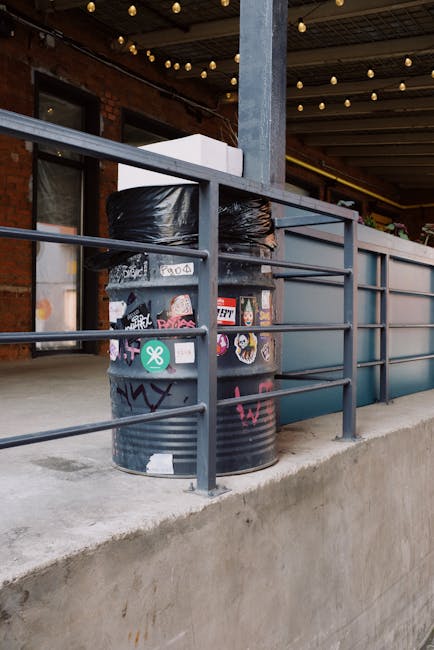
Boxpark Shoreditch: best disposal options for traders
If you trade at Boxpark Shoreditch, you already know the rhythm: busy footfall, tight storage, fast turnaround, and not much room to let unwanted items pile up. One broken display stand, a stack of cardboard after delivery day, or a few worn-out fixtures can suddenly get in the way. That's where choosing the best disposal options for traders really matters.
This guide breaks down the most practical ways to handle trader waste, old stock, packaging, furniture, and shop-fit leftovers in a way that is efficient, sensible, and realistic for a fast-moving retail and hospitality environment. You'll find what works, what tends to go wrong, and how to keep your space clean without making the whole process a drama. Truth be told, most traders just want a disposal method that is quick, compliant, and not a headache. Fair enough.
We'll also look at how to match the right option to the type of waste you have, when a professional clearance service makes more sense than trying to manage it in-house, and how to keep on the right side of duty-of-care expectations. If you need broader support, you may also find our business waste removal and general waste removal pages useful alongside this guide.
Table of Contents
- Why disposal choices matter for Boxpark traders
- How trader disposal usually works
- Key benefits and practical advantages
- Who this is for and when it makes sense
- Step-by-step guidance
- Expert tips for better results
- Common mistakes to avoid
- Tools, resources and recommendations
- Law, compliance, standards, and best practice
- Options, methods, and comparison table
- Case study or real-world example
- Practical checklist
- Conclusion
- Frequently asked questions
Why Boxpark Shoreditch: best disposal options for traders Matters
Boxpark is a lively, compact environment. That is part of the appeal, but it also means traders have less tolerance for clutter, missed collections, and waste sitting around too long. In a space built on movement, presentation, and customer experience, disposal is not a background task. It affects how your unit looks, how safely your team can work, and how smoothly deliveries, replenishment, and close-downs run.
For traders, waste builds up in different ways. A food unit may generate packaging, food waste, and broken containers. A fashion or lifestyle retailer may need to move cardboard, hangers, packaging film, rails, and obsolete stock. A pop-up or seasonal trader might suddenly have a one-off clearance when an installation ends. These are all slightly different problems, and they need different answers.
The right disposal approach can also protect your time. If your staff are dragging boxes down a busy corridor or waiting for a missed pickup, that's time not spent serving customers. And in a place like Shoreditch, where pace matters and space is at a premium, a clean handover is worth a lot. It keeps the unit usable and the team sane. Slight understatement, perhaps.
There is also the trust factor. Customers notice if a venue feels tidy and professional. They may not consciously think about waste management, but they notice the absence of clutter, the smell of freshness rather than stale cardboard, and the sense that the place is being looked after properly.
How Boxpark Shoreditch: best disposal options for traders Works
At a practical level, trader disposal usually starts with a simple question: what type of waste do you have, how much of it is there, and how quickly does it need to go?
That sounds basic, but it is the part people often skip. Once you know whether you're dealing with mixed waste, recyclable packaging, bulky furniture, or shop-fit debris, the right disposal route becomes much clearer.
In most cases, traders use one or more of the following methods:
- Scheduled commercial collections for routine waste streams such as packaging or day-to-day refuse.
- Ad hoc clearance services for bulky items, end-of-line stock, or sudden changes to the unit.
- Recycling-led sorting where cardboard, metals, plastics, or reusable items are separated before collection.
- Specialist disposal for items such as damaged counters, back-of-house furniture, or fit-out waste.
A good provider will normally ask about access, volume, timing, and what the waste contains. That helps them plan the right vehicle, crew, and disposal route. If the waste is mixed, heavy, or awkward to move, a tailored collection is usually more efficient than trying to force it into a standard bin arrangement.
For traders dealing with furniture or fixture changes, a dedicated service can be especially useful. Our furniture disposal and furniture clearance pages explain how bulky items are often handled when units are being refreshed or reconfigured.
In our experience, the process works best when it is planned before waste becomes urgent. A last-minute "we've got nowhere to put this" situation usually ends up costing more time and creating more mess. Not ideal.
Key Benefits and Practical Advantages
Choosing the right disposal method is not just about getting rid of stuff. It can improve workflow, reduce stress, and support a better customer experience. Here are the main benefits traders tend to notice first.
1. Less clutter, better trading space
When waste leaves quickly, your unit feels more open and easier to work in. Staff can move around safely, stock can be displayed properly, and you avoid that cramped-back-room feeling that slowly drains the day. A clear floor is a quiet win.
2. More reliable turnaround between changes
Boxpark traders often deal with quick changes: seasonal stock, new displays, campaign resets, and occasional fit-out work. A practical disposal arrangement means those changes can happen without everything piling up in corners.
3. Better compliance and record-keeping
When waste is handled properly, you reduce the risk of misunderstandings about where it went and how it was managed. For business waste, that matters. Good records and proper service choices help support duty-of-care expectations.
4. Smarter use of labour
If staff are spending time moving broken shelving, flattening boxes, or making multiple trips to a waste point, that time adds up. A professional clearance can be more cost-effective than it first looks, especially when you factor in disruption.
5. Better sustainability outcomes
Many traders want to reduce landfill where possible. Separating reusable, recyclable, and general waste is a practical first step. If sustainability is part of your brand story, this is one of those unglamorous back-of-house details that actually matters. For more on this, see recycling and sustainability.
Expert summary: For Boxpark traders, the best disposal option is usually the one that balances speed, access, compliance, and sorting efficiency. Not just the cheapest option on paper.
Who This Is For and When It Makes Sense
This guide is for traders who need a sensible way to remove waste without disrupting service. That includes food and drink operators, retail units, pop-ups, seasonal traders, and anyone responsible for fitting out, refreshing, or clearing a compact commercial space.
It makes sense if you are:
- opening a new unit and need packaging or fit-out waste cleared
- closing, relocating, or refitting your trading space
- dealing with bulky items that don't fit normal collections
- building up regular cardboard, plastic, or mixed business waste
- trying to reduce clutter behind the counter or in storage areas
- working to a tight schedule with limited staff availability
It is also relevant if you only trade part-time. A weekend operator can still generate a surprising amount of waste in a short burst. Boxes, pallets, delivery wrap, broken display pieces, takeaway packaging, you know the drill. One busy Friday evening and suddenly the back area looks like it has had a small argument with a warehouse.
If your waste is mainly operational and recurring, a service such as business waste removal is often the right starting point. If you're shifting larger items or resetting the unit, then clearance is usually a better fit.
Step-by-Step Guidance
Here is a simple way to approach disposal without overcomplicating it.
- Identify the waste type. Separate cardboard, plastic wrap, food waste, old fixtures, and reusable items if you can.
- Estimate the volume. A single van load and three days' worth of packaging are very different jobs.
- Check access. Note loading points, time restrictions, internal stairs, narrow walkways, and any shared space issues.
- Decide what can be reused or recycled. Some packaging and furniture can be diverted rather than sent as mixed waste.
- Choose the disposal route. Routine business waste, one-off clearance, furniture disposal, or specialist waste.
- Book at the right time. Pick a window that avoids your busiest customer periods.
- Prepare the items. Flatten boxes, empty containers, and keep recyclable material separate where possible.
- Confirm what happens next. Ask how the material will be handled, where relevant, and what paperwork or receipts you'll receive.
That simple process saves a lot of friction. It also helps you get a more accurate quote, which matters if you are comparing options. If pricing is on your mind, the pricing and quotes page is a sensible place to start when planning a disposal budget.
A quick practical example
Imagine a trader replacing display units after a seasonal refresh. The old shelves are still usable in parts, but they are too worn for the shop floor. Cardboard from the new stock is piling up, and the back room is getting awkward to move through. In that case, a mixed approach often works best: separate the recyclable packaging, remove the bulky fixtures through a clearance service, and keep the general waste stream for day-to-day operations. Simple. Clean. Done.
Expert Tips for Better Results
Here are a few field-tested habits that make disposal smoother for traders. Nothing fancy, just the kind of thing that saves time when the unit is busy.
- Label waste areas clearly. A small sign or colour-coded bag system can stop recyclable material from being mixed in by accident.
- Book around trading peaks. Early morning or after close often works better than trying to clear waste in the middle of service.
- Keep a small staging area. Even a modest, tidy holding point can stop clutter spreading into the customer zone.
- Separate bulky items from loose waste. This makes handling easier and often reduces the chance of avoidable delays.
- Ask about lifting and access before collection. The less guesswork, the better the outcome.
- Document recurring waste streams. If you always have the same kind of rubbish, build a routine around it rather than starting from scratch each time.
One small thing we often see: traders underestimate how quickly cardboard multiplies. It sits flat for a while, then suddenly the pile looks like it appeared overnight. It happens to everyone.
If your waste includes mixed bulky items, a broader service such as waste removal can be more efficient than piecemeal handling.
Common Mistakes to Avoid
Waste management usually becomes difficult for one of a few reasons. Knowing them in advance helps you avoid the same old problems.
- Leaving it too late. Emergency disposal is nearly always more stressful and less tidy.
- Assuming all waste is the same. Cardboard, food waste, packaging, and fixtures are handled differently for a reason.
- Not checking access. A service can only move as smoothly as the space allows.
- Mixing recyclables with general waste. That can reduce recovery options and make the whole load less efficient.
- Overfilling back-of-house areas. It might seem temporary, but clutter tends to stay longer than planned.
- Ignoring service terms. If you are booking a provider, understand what is included, what is excluded, and when collections can happen.
A lot of these mistakes are small on their own. Together, though, they can create a surprisingly messy week. The fix is usually planning, not drama.
Tools, Resources and Recommendations
You do not need a complicated system, but a few simple tools can make trader disposal much easier.
- Heavy-duty bins or sacks for separating waste streams at source.
- Box cutters and tape dispensers to flatten and prep packaging quickly.
- Labelled storage crates for reusable items or stock awaiting collection.
- Simple waste log to track recurring disposal needs and spot patterns.
- Phone photos before clearance if you want a record of what is being removed.
- A clear contact list for whoever manages your collections, especially if staff change shifts.
For traders setting up or refreshing a unit, it can also help to review specialist services like office clearance for back-of-house or admin-style spaces, and furniture clearance for counters, shelving, chairs, and other bulky items.
If the work is more about opening up a unit after storage has built up, you might also find flat clearance useful as a reference point for how compact, cluttered spaces are often cleared efficiently. Not identical, but the same practical logic applies.
Law, Compliance, Standards, and Best Practice
For traders, disposal is not just an operational issue. There are also legal and best-practice expectations around how business waste is handled. I'll keep this plain-English, because no one needs a lecture over a pile of packaging.
In the UK, businesses generally have a duty to make sure their waste is stored, handled, and transferred responsibly. That means using a legitimate carrier where needed, keeping an eye on segregation, and not dumping mixed commercial waste in the wrong place. Exact requirements can vary depending on the waste type and your circumstances, so if your site produces anything unusual, it is wise to check the details rather than guess.
Good practice usually includes:
- keeping waste contained and not obstructing access routes
- sorting recyclable and general waste where possible
- making sure collections happen under clear terms
- keeping relevant records or paperwork for business waste transfers
- using sensible manual handling methods to reduce injury risk
If you are dealing with staff safety, moving bulky items, or repeated collections, it is also worth reviewing the provider's approach to health and safety and insurance and safety. Those pages can help you understand what a responsible service should have in place.
And because trust matters, it's sensible to know who you're dealing with. A clear about us page and transparent terms and conditions can tell you a lot before you book.
Options, Methods, and Comparison Table
There is no single perfect disposal method for every Boxpark trader. The right choice depends on waste type, volume, timing, and how often the waste appears. Here is a straightforward comparison.
| Option | Best for | Strengths | Watch-outs |
|---|---|---|---|
| Routine business waste collection | Day-to-day waste, packaging, general operational rubbish | Predictable, easy to schedule, efficient for repeat waste | Less suitable for bulky items or one-off clearances |
| One-off waste removal | Unexpected build-ups, mixed waste, ad hoc clean-ups | Flexible, quick, useful for irregular volumes | May cost more than a routine service if used constantly |
| Furniture or fixture disposal | Old counters, shelving, chairs, display units | Handles bulky items that are awkward in standard bins | Needs access planning and sometimes dismantling |
| Recycling-led sorting | Cardboard, certain plastics, metals, reusable material | Supports sustainability, can reduce mixed waste volume | Requires discipline from staff and a bit of space |
| Full clearance service | Closures, refurbishments, stock resets, larger unit changes | Fast, comprehensive, reduces disruption | Needs good planning and clear communication |
For many traders, the answer is not one method but a combination. Routine collections for the everyday stuff, plus a clear-out service for the awkward, bulky, or time-sensitive items. That mix tends to work well in compact trading environments.
Case Study or Real-World Example
Here's a realistic example based on the kind of situation traders often face.
A small retail trader at Boxpark Shoreditch had built up several weeks of packaging, broken hangers, a damaged display table, and a few boxes of unsold seasonal stock. The back area had become tight enough that staff were stepping around it rather than through it. No one likes that. It slows everything down and creates a slightly frazzled atmosphere before opening.
The trader split the problem into three parts. Cardboard and clean packaging were flattened and separated for recycling. The display table and worn shelving were booked for furniture disposal. The remaining mixed waste was cleared at the same time to avoid a second round of disruption. The result was not just a tidier unit, but a more usable one. Staff could restock more easily, and the customer area looked sharper again.
What made the difference was not a clever trick. It was simply choosing the right disposal path for each waste type, rather than treating everything as one big pile of stuff to get rid of. Small discipline, big payoff.
Practical Checklist
Use this checklist before booking your disposal or clearance.
- Have you identified all waste types correctly?
- Have you separated recycling from general waste where possible?
- Do you know the approximate volume and weight?
- Have you checked access, timing, and any site restrictions?
- Are bulky items ready for collection or dismantling?
- Do staff know what needs to be kept aside?
- Have you confirmed the provider's terms and collection process?
- Do you need records, receipts, or transfer documentation?
- Have you considered safety, lifting, and clear walkways?
- Have you chosen a slot that won't disrupt peak trading hours?
Quick reminder: A tidy clearance is usually the result of good prep, not luck.
Conclusion
For traders at Boxpark Shoreditch, the best disposal option is the one that fits your waste type, your schedule, and the realities of a busy compact unit. Sometimes that means regular business waste collections. Sometimes it means a one-off clearance for furniture, fixtures, or end-of-line stock. And sometimes it means using a mix of recycling, removal, and planned sorting so the unit keeps working properly.
The main thing is to avoid letting waste become part of the scenery. Once that happens, it quietly eats space, time, and energy. Better to deal with it early, keep the process simple, and choose a method that gives you room to trade properly.
If you're planning a clearance, a refit, or a regular waste solution, start with a service that understands commercial spaces, access challenges, and the need to move quickly without making a mess of the place. That's usually the difference between an annoying chore and a smooth, almost forgettable job. Which is what you want, really.
Get a free quote today and see how much you can save.
Frequently Asked Questions
What is the best disposal option for Boxpark Shoreditch traders?
It depends on the type of waste. Routine business waste works well for everyday rubbish, while bulky items, old furniture, or clear-outs are usually better handled through a clearance or disposal service.
Can traders at Boxpark Shoreditch use the same collection method for all waste?
Usually not. Mixed waste, cardboard, food waste, and bulky fixtures are handled differently. A single catch-all approach often creates more cost and less efficiency.
How do I know whether I need waste removal or furniture disposal?
If the items are bulky but still manageable as individual pieces, furniture disposal is often the better fit. If you have a broader mix of rubbish, packaging, and loose waste, general waste removal may suit you better.
Is recycling worth organising for a small trading unit?
Yes, especially where cardboard and packaging build up quickly. Even small units can produce a lot of recyclable material, and separating it can reduce clutter and make collections more efficient.
What should I do before booking a clearance?
Sort the waste, estimate the volume, check access, and make sure staff know what is being removed. That little bit of prep usually saves a lot of back-and-forth later.
Can I dispose of old stock and broken fixtures together?
Sometimes yes, but it depends on the materials involved. It's often better to separate reusable or recyclable items from mixed waste so the collection can be handled more effectively.
How often should traders arrange waste removal?
That depends on turnover and space. High-footfall food or retail traders may need frequent collections, while pop-ups or seasonal operators might only need periodic clear-outs. The rule is simple: collect before the back area becomes a problem.
What if I have no room to store waste before collection?
Then timing matters even more. Book a collection window that matches your trading pattern and ask about access in advance. In tight spaces, planning is the whole game.
Are there compliance issues I should think about?
Yes. Businesses generally need to handle waste responsibly and keep appropriate records where relevant. If your waste is unusual or potentially sensitive, check the details carefully rather than assuming.
How can I keep disposal costs under control?
Sort waste before collection, avoid unnecessary mixed loads, and book the right service for the job. Comparing the job type properly often saves more money than chasing the cheapest headline price.
Do traders need a special service for end-of-fit-out waste?
Usually yes, or at least a service designed for builders waste or mixed clearance. Fit-out waste is often heavier, messier, and less suitable for standard collections. If that sounds familiar, the builders waste clearance page may be helpful.
How do I choose a provider I can trust?
Look for clear service information, straightforward pricing, sensible terms, and safety-focused practices. A transparent provider should make it easy to understand what they will collect, how they'll handle it, and what happens next.
What if I need more general support beyond trader waste?
If your needs extend beyond one-off disposal, it can help to look at broader services such as office clearance, home clearance, or house clearance depending on the situation. Different spaces need different approaches, and the right match saves time.
Who can I contact if I want to discuss a disposal plan?
You can speak directly with the team through the contact us page to talk through the type of waste, access, and timing. That's usually the easiest way to get something practical organised without fuss.
Where can I learn more about the company's service standards?
It's worth reviewing the provider's about us, insurance and safety, and recycling and sustainability pages so you can get a better feel for how they work and what they prioritise.